Monday, July 23, 2012

Opening of :  Summer Group Exhibitions: Recology Alumni, Lynn Marie Kirby, and SFartsED / International Orange

July 21, 2012 – August 25, 2012

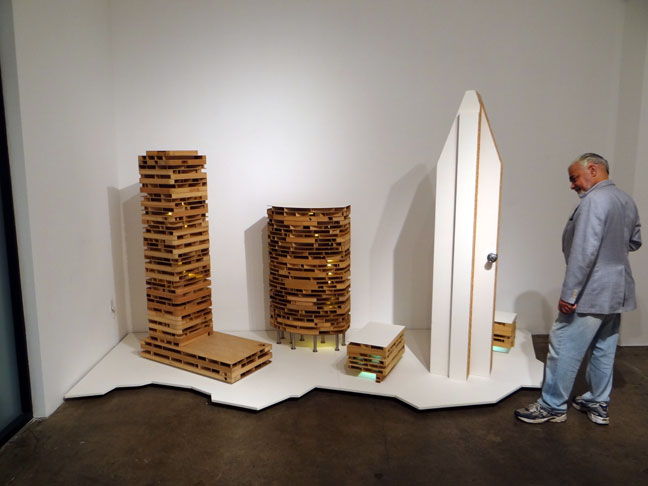
Main Galleries: Group Exhibition of Six Alumni from the Artist in Residence Program at Recology San Francisco.

Exhibiting artists: Donna Anderson Kam, Terry Berlier, Lauren DiCioccio, Barbara Holmes, Scott Kildall, and Abel Rodriguez.

Media Room: Lynn Marie Kirby in collaboration with Bartek Rost, part of SFartsED/International Orange: The Bridge Re-Imagined.

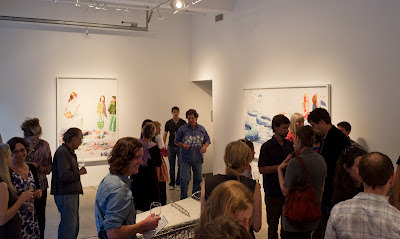


Catharine Clark Gallery announces a group exhibition showcasing six alumni of the Artist in Residence Program at Recology San Francisco (AIR) and a collaboration from San Francisco Arts Education Project (SFArtsED). The exhibit celebrates the relationships between artists, galleries, and non-profits, in conjunction with city-wide programming for International Orange: artists respond to the 75th anniversary of the Golden Gate Bridge. The main galleries feature the works of six AIR alumni: Donna Anderson Kam, Terry Berlier, Lauren DiCioccio, Barbara Holmes, Scott Kildall, and Abel Rodriguez. Presented in the Media Room is a video collaboration between artist Lynn Marie Kirby and public school student Bartek Rost, and is part of the SFArtsED exhibition, International Orange: The Bridge Re-Imagined. The exhibition dates are July 21 through August 25, 2012. Artists, students, and representatives from the partnering organizations were present at the opening reception on Saturday, July 21, from 4 to 6pm.  5pm opening remarks by Emily Keeler and Richard Olsen of SFArtsED and Deborah Munk of AIR. A portion of the proceeds from the sales of the works benefit the non-profit institutions. For the full Press Release, including artists' bios, visit www.cclarkgallery.com


Catharine Clark Gallery: Recology Group Exhibition.
Artists: Donna Anderson Kam, Terry Berlier, Lauren DiCioccio, Barbara Holmes, Scott Kildall, Abel Rodriguez.

Comment by AB: Group show features the work of six alumni of Recology's Artist in Residence Program (AIR). When it comes to making art, the things other people throw away provide a bounty of materials that can be rescued, revived, revitalized and transformed to once again contribute to the splendor of our environment rather than litter or pollute it. Good show; check it out.


Monday, February 20, 2012


ArtBusiness.com : January 20, 2012


San Francisco Dump Artist in Residence Exhibitions:
Donna Anderson Kam -Beginning at the End.
Terry Berlier -Even the Windmills are Weakening.
Ethan Estess - Stories from the Changing Tide.

Comment by AB:
Terry Berlier's sculptures take the prize here.A shopping cart and birdcage
weighted with concrete, a 360 degreeworking piano-esque music making
mechanism, a meandering spiralsonata made from chair and table leg
sections, and a contorted pocketbilliard affair. Too good! Also on the
docket, works on paper byDonna Anderson Kam made entirely from
salvaged materials.And in the annex gallery, a ropey whale tale to remind
us thatour deep sea friends deserve consistent and serious attention, a
propane tank flower blossom, a duct-draped creature, and more by
Ethan Estess.


Photo

Art by Donna Anderson Kam at Recology Art at the Dump.


Donna Anderson Kam artist

Donna Anderson Kam and her art.


art

Art by Donna Anderson Kam at SF Dump Residence Exhibitions.


Photo

Donna Anderson Kam art.


Photo

Circumstance - Donna Anderson Kam and Terry Berlier at SF Dump.


Terry Berlier artist art

Piano-esque art by Terry Berlier at Recology Residence (like it).


art

Art by Terry Berlier.


Photo

Terry Berlier and art in above image closer.


Terry Berlier art

Art by Terry Berlier at SF Dump Residence Exhibitions.


art

Terry Berlier art (kinda like it).


Photo

Art by Terry Berlier at SF Dump Residence Exhibitions.


Photo

Whale tale reminder art by Ethan Estess (like it).


Ethan Estess art

Ethan Estess gas tank art at SF Dump Residence Exhibitions.


Photo

Recycling art by Ethan Estess.


Ethan Estess artist

Air duct art by Ethan Estess.


Photo

Friends and admirers of Ethan Estess at SF Dump Gallery Annex.

Wednesday, February 1, 2012

"Beginning at the End" Recology San Francisco Gallery, January, 2012

(08-12-2011) 4:51 PDT Little Hollywood, CA. (AP)--
(08-12-2011) 4:48 PDT Little Hollywood, CA. (AP)--
(08-12-2011) 4:42 PDT Little Hollywood, CA. (AP)--
                                      (08-12-2011) 4:49 PDT Little Hollywood, CA. (AP)--
(08-12-2011) 4:40 PDT Little Hollywood, CA. (AP)--

Monday, January 23, 2012

The Daily Californian | A&E, Monday, January 23, 2012

Second Chances: San Francisco recycling center hosts sustainable art exhibit

Recology Art Show
Carli Baker/Staff
A garbage facility may sound like a terribly unattractive place to visit — let alone as a subject of artistic scrutiny. Yet this past Friday at a recycling and disposal center, Recology San Francisco, the unique Artist in Residence exhibition turned the notion of waste as useless or ugly on its head. Like the circular movement of the recycling services at Recology SF, local artists the program supports are given priority to sift through the vast piles of junk and reclaim trash into works of art.
The exhibitions of artwork by Donna Anderson Kam, Terry Berlier and student artist Ethan Estess were a diverse range from the surreal (Estess’s mannequin with a backpack overflowing with coffee lid tentacles) to the delicately beautiful (Kam’s rainbow pastel drawings). Overall, the exhibitions were thought-provoking examinations on the environmental impact of waste from a microcosmic level.

While dialogue on green sustainability is nothing new — we all hear from scientists and news op-eds on how reckless human consumption ravages Earth’s ecosystems — what’s striking about the Recology SF art exhibit is its intimate approach to garbage. Formed by everyday knick-knacks, the art highlights the disposable nature of all that we own. The result is a rare feat of connecting individual actions to larger social responsibility without feeling forced — an aesthetic reminder that the mountains of trash in dumps are simply made of objects left by each and every one of us.

The hidden (or ignored) reality of material excess ties the ideals of Recology SF together. “All the artists that come through our program have different experiences, but there’s an underlying theme of surprise and overwhelming unbelief at the amount of materials that we buy and don’t use,” commented Deborah Munk, the director of the Artist in Residence Program. Munk then pointed out that napkins alongside the night’s refreshments were from unopened boxes dumped in 2003.

To look through the peephole in Terry Berlier’s piece “Event Horizon” is to understand the bizarre overload of disposed objects at places like Recology. With scavenged IKEA slats, Berlier constructed layers of wooden octagons that jut out of the wall, with a lamp swinging above. When one peers inside, a mirror reflects the viewer’s eye and the surrounding tunnel into infinite angles, with rings of light traveling across the continuum. The piece is a graceful expression of the surreal, endless excess Berlier witnessed during her residence.

“The first month or two you’re completely overwhelmed, seeing the amount of garbage we create as a society,” recounted Berlier. An assistant professor of sculpture at Stanford, Berlier connected her experience to theories like an event horizon (the point at which light can no longer escape a black hole): “I felt like I was the point of no return. The artists here (at Recology) are like the last moment of scavenging these materials.”

Evident from Berlier’s account, constant exposure to the dump alters an artist’s perspective on how society disposes materials. In “Homespun,” Berlier weaves wooden bedposts into a large chain that snakes in and out of the wall before spiraling across the floor. In effect, the junk left by our domestic lives is projected as an absurd buildup of trash over time.

But if Berlier appears pessimistic about the future of waste, her most interactive piece is uplifting: a circle of playable ivory keys (from an upright piano) wired to a Dell microcontroller and a Mac. Berlier titled the piece “The Beginning and the End Meet,” as it seemed poignant amongst the wasteland of ruined objects. “This whole place for me was about the end, where all these materials end up here,” related Berlier, “But it’s not the end — it has an impact.” With the right mindset, even discarded technology can meld into future designs.

While Recology’s assorted junk is a virtual playground for sculptors like Berlier, it’s a challenge for artists like Donna Anderson Kam. Kam usually creates large-scale pastel drawings, but basic materials like paper were hard to come by as tractors compact piles at the dump. However, she remained enthusiastic towards reusing what others consider garbage. “Everything comes to an end here, and it’s really wonderful to experience that and try to make something new and fresh from it,” said Kam.

Indeed, Kam experimented with collages of advertisements in her process. Typically, Kam photographs young actors performing scenes, then sketches the images. In one piece from Kam’s “Little Hollywood, CA” series, a large canvas portrays disaffected youth rendered with a stunning spectrum of colors, with wild grass cut from a Budweiser ad. The details seem both real and artificial, reflecting a cultural environment where rampant consumerism becomes as natural as fields and trees.
In the end, hope for the future of ecology came from young artists like Ethan Estess. A grad student of interdisciplinary environmental science at Stanford, Estess has a passion for bridging marine ecology and sculpture. “Science writing is structured to be devoid of emotion,” said Estess, “but you can’t make decisions without emotions. Every choice we make comes from our conscious.”

“Hopefully, with my artwork, I can foster that environmental consciousness,” he concluded. And by showcasing the secret life of things we throw away, artists like Estess do just that: They bring matters of conservation science closer to the heart.

Sunday, January 22, 2012

'Trash' exhibit to open at Recology art gallery

Thursday, January 19, 2012

Don't call it trash! It's art (but it was trash once.)
There's an art gallery at Recology, the disposal center near Candlestick Park, and an exhibition is opening there Friday.
A circular keyboard from an old upright piano, controlled by a discarded laptop... Vinyl sign material that becomes part of an environmental drawing... You can find this stuff in the studios of the two current artists-in-residence.
Their resource is the place where people drop off their trash.
Hundreds of artists have gone through the Recology residence program in 21 years. Some of their works are displayed in a 3-acre sculpture garden. They give tours by appointment and they hope the works might be inspirational.
(Copyright ©2012 KGO-TV/DT. All Rights Reserved.) 
 

"Beginning at the End" and Even the Windmills are Weakening" at Recology SF's Art Studio Gallery, Friday January 20th